Root Canal Therapy in Redmond, WA
Comfortable Care for Tooth Pain and Infection
A root canal saves the tooth instead of losing it. Most are done in one visit.

What Root Canal Therapy Actually Is
Hearing that you need a root canal is nobody’s favorite moment. The reputation is worse than the reality: the procedure is what stops the pain, not what causes it, and most patients tell us afterward that it felt no different from having a filling done.
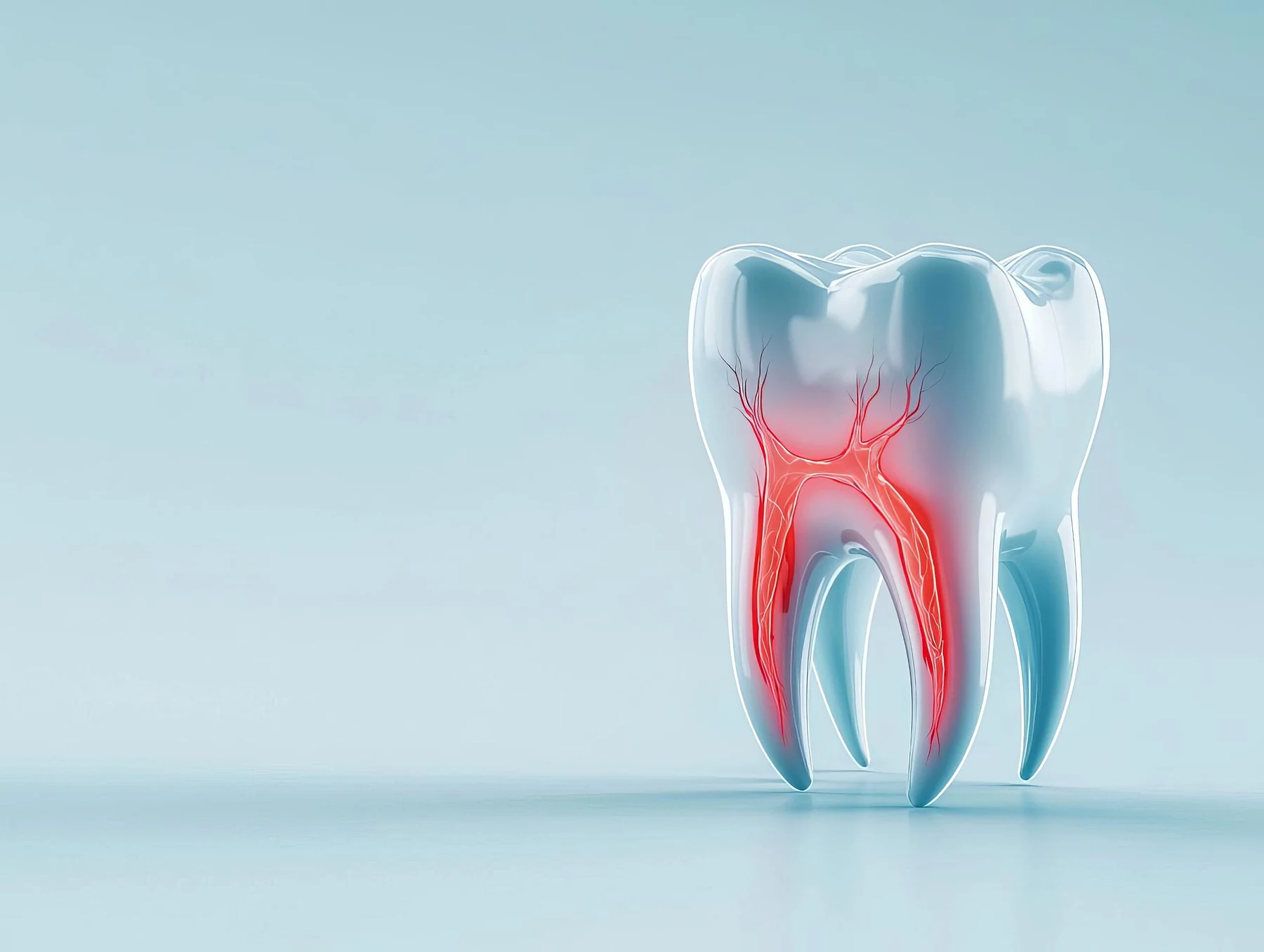
Inside every tooth is a chamber of soft tissue — the pulp — that contains the nerve and blood supply. When decay, a crack, or an injury lets bacteria reach that chamber, the tissue becomes infected. The infection does not resolve on its own, and it does not stay put. A root canal removes the infected tissue, disinfects and seals the inside of the tooth, and lets you keep the tooth instead of extracting it.
What the procedure involves
- Numbing the tooth and the tissue around it completely
- Removing decay and creating a small opening into the pulp chamber
- Cleaning and shaping the canals inside the root
- Filling the canals with gutta-percha, a stable rubber-like material
- Sealing the opening and, in most cases, restoring the tooth with a crown
Signs You May Need a Root Canal
Some infected teeth announce themselves loudly. Others are nearly silent, which is one reason routine exams and X-rays matter. Call us at (425) 898-2168 if you notice any of the following.
- Severe or persistent toothache, especially when biting or applying pressure
- Lingering sensitivity to hot or cold that continues after the source is gone
- A tooth that has darkened or discolored compared to its neighbors
- Swelling or tenderness in the gum near the tooth
- A pimple-like bump or draining sore on the gum
- Facial swelling along the jaw or cheek
How urgent is this?
Urgent. A dental infection does not stay confined to the tooth — it can spread into the surrounding bone and soft tissue, and in serious cases beyond that. Pain that suddenly stops is not a sign of improvement; it often means the nerve has died while the infection continues. We hold time in our schedule each day for situations like this.
Your Root Canal Visit, Step by Step
Step 1: Exam and diagnosis
Your dentist tests the tooth, takes a focused digital X-ray, and confirms whether the pulp is actually involved. You will see the images and hear exactly what we are looking at, including whether a root canal is genuinely the right call.
Step 2: Getting you comfortable
The tooth and surrounding tissue are fully numbed before anything begins. If dental anxiety is part of the picture, we can plan the visit around oral sedation instead. Learn more about Sedation Dentistry →
Step 3: Cleaning the canals
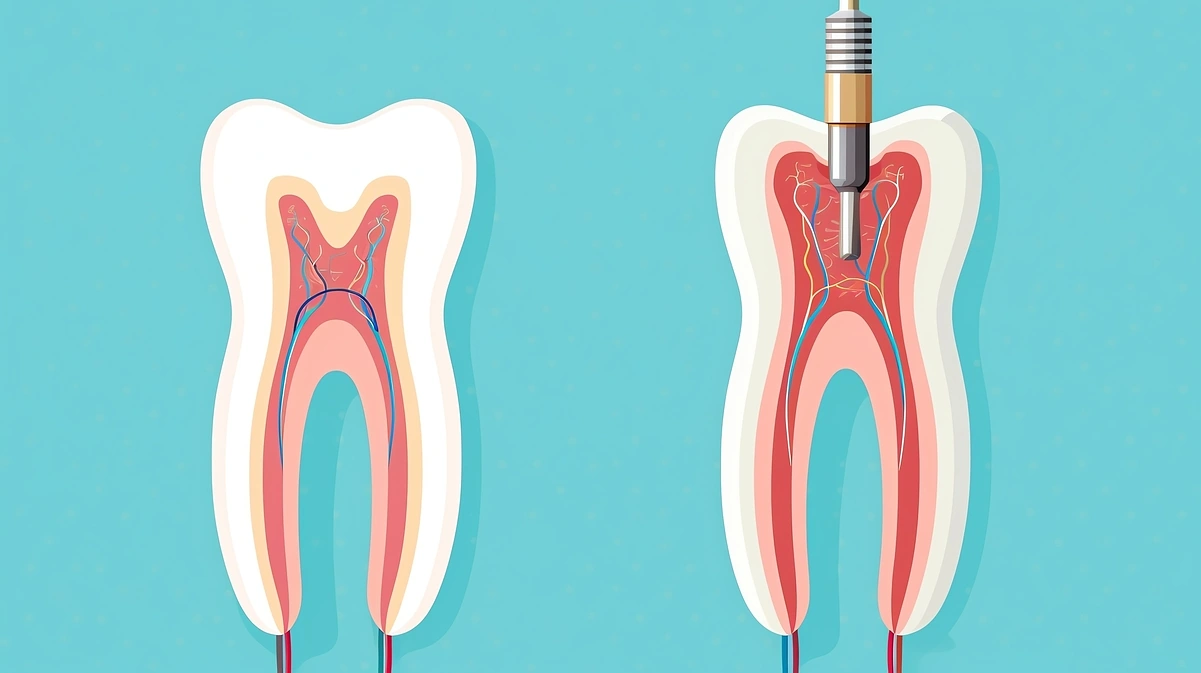
Your dentist opens the tooth, removes the infected tissue, and cleans and shapes each canal inside the root. This is the part that takes the most time, and it is the part that resolves the pain.
Step 4: Filling and sealing
The cleaned canals are filled with gutta-percha and sealed so bacteria cannot re-enter. In some cases we place a temporary filling and bring you back to complete the restoration.
Step 5: Protecting the tooth
A tooth that has had a root canal is more brittle than a healthy one, particularly in the back of the mouth. Most need a crown to handle normal chewing force for the long term. We will tell you before we start whether yours will.

What to Expect Afterward
Most patients go back to work or school the same day. The tooth is often tender for a few days as the tissue around it settles, and over-the-counter pain relievers usually handle it. The sharp pain you came in with should be gone — if it is not, call us.
Caring for the tooth
- Chew on the other side until the permanent restoration is placed
- Brush and floss the tooth normally — it still needs cleaning
- Take any prescribed antibiotics through the full course
- Come back for the crown appointment; a root-canaled tooth left unprotected can fracture
When a specialist is the better choice
We handle many root canals in-house. Some are better sent to an endodontist, a specialist who does nothing but root canals: unusually curved or calcified canals, molars with complicated anatomy, teeth that have had a root canal before and need retreatment, or cases where the diagnosis is genuinely unclear. When that is the situation, we will tell you honestly and refer you to a trusted endodontist on the Eastside.
Frequently Asked Questions
Does a root canal hurt?
The procedure itself should not. The tooth is fully numbed first, and most patients say it felt no different from having a filling done. What hurts is the infection — the root canal is what ends it.
What are the signs I might need a root canal?
Persistent toothache, pain when biting, lingering sensitivity to hot or cold, a darkened tooth, swelling, or a bump on the gum near the tooth. Some infected teeth cause no symptoms at all, which is why routine exams and X-rays matter. If you notice any of these, call us at (425) 898-2168.
Will my root canal be done in one visit?
Most are completed in a single appointment. More complex cases, or teeth with significant infection, may need a second visit. Your dentist will tell you which to expect before starting.
Do I need a crown afterward?
Usually, especially for molars and premolars. A tooth that has had a root canal is more brittle and can fracture under normal chewing force. Front teeth sometimes do fine with a filling. We will tell you which applies to your tooth before treatment begins.
How much does a root canal cost?
It depends on which tooth is involved and how complex the canals are — a front tooth is simpler than a molar. Most PPO dental plans cover root canal therapy. We give you a clear estimate before any work begins, and CareCredit financing is available.
Do you offer sedation for root canals?
Yes. We offer oral sedation for patients who feel anxious about the appointment, in addition to the local anesthetic that numbs the tooth itself.
How urgent is a tooth infection?
Very. Dental infections spread into the surrounding bone and tissue and get harder to treat over time. If the infection involves facial swelling, or any difficulty breathing or swallowing, go to the emergency room first.
Can I just have the tooth pulled instead?
You can, and sometimes extraction is the right answer. But replacing a missing tooth with an implant or bridge costs more than saving the one you have, and nothing functions quite like your natural tooth. We will walk you through both options honestly.
What if a tooth that had a root canal is hurting again?
That happens occasionally, and it is usually treatable with retreatment. These cases are often best handled by an endodontist, and we will refer you to a trusted specialist on the Eastside when that is the right call.