Custom Night and Sports Guards in Redmond, WA
Protection That Actually Fits
Molded to your teeth, not bought off a shelf. For grinding, clenching, and contact sports.
Why a Custom Guard Beats a Boil-and-Bite
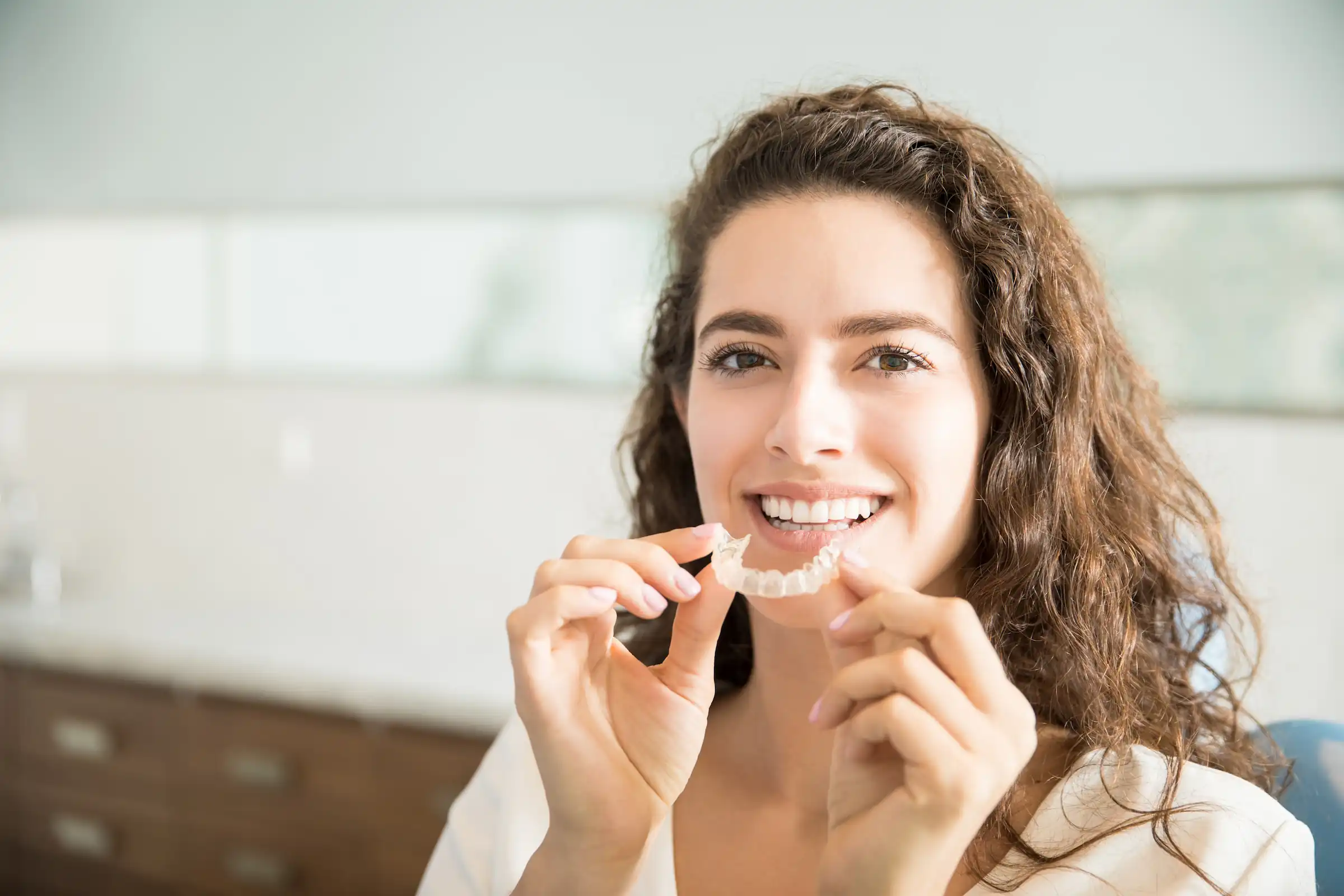
A mouth guard only works if it stays put and fits the way your teeth actually sit together. Drugstore boil-and-bite guards are bulky, they shift while you sleep or play, and because they are not built to your bite they can leave your jaw working harder than it was before. They also wear out fast — often in a matter of weeks.
A custom guard is made from impressions or a digital scan of your own teeth. It is thinner, it breathes better, it stays where it belongs, and it distributes force evenly across the arch instead of concentrating it on a few teeth. The material and thickness are chosen for your situation rather than pulled off a shelf. Most patients find they can actually sleep or play in one, which is the whole point — a guard in a drawer protects nothing.
We make two kinds
- Night guards for grinding and clenching (bruxism), worn while you sleep
- Sports guards for contact and collision sports, worn during practice and games
Night Guards for Grinding and Clenching
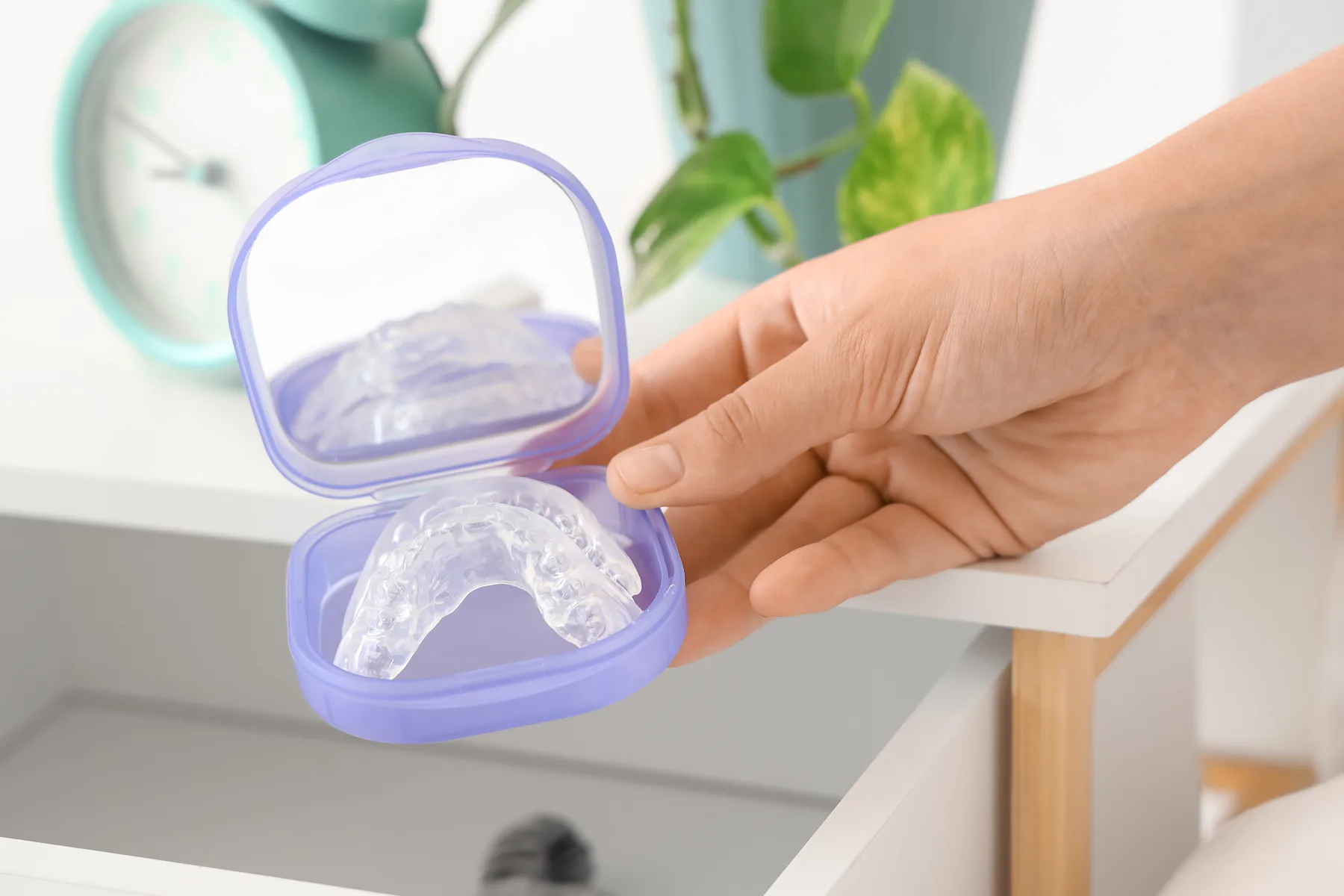
Bruxism is grinding or clenching your teeth, usually at night and usually without knowing you are doing it. Most people find out from a partner, or from us — the wear pattern on the teeth is unmistakable long before the symptoms are.
Signs you may be grinding
- Tension headaches, often starting at the temples or behind the eyes
- Jaw soreness, tightness, clicking, or fatigue in the morning
- Neck and ear pain that has no other clear cause
- Teeth that look flattened, chipped, or worn at the biting edges
- Sensitivity to cold or pressure across several teeth
- Disrupted sleep, for you or the person next to you
- Existing crowns, veneers, or implants you want to protect long-term
Left alone, grinding wears through enamel, fractures teeth and existing restorations, and puts steady strain on the jaw joint. A night guard does not stop you from grinding — it gives the force somewhere harmless to go. If you have had veneers, crowns, or bonding done, a night guard is the single best thing you can do to protect that work.
Sports Guards for Athletes
A sports guard cushions impact to the teeth, lips, and jaw, and it is standard equipment for football, hockey, basketball, soccer, wrestling, martial arts, lacrosse, skateboarding, and mountain biking. Dental injuries in sports are common, expensive, and largely preventable.
Custom sports guards matter more for kids and teens than most parents expect. A guard that fits poorly gets chewed on, pushed out of place, or quietly left in a gym bag. One that fits gets worn.
What a sports guard protects against
- Chipped, fractured, and knocked-out teeth
- Cuts to the lips, cheeks, and tongue
- Damage to braces and other orthodontic appliances
- Jaw injuries from impact
Especially important for
- Kids and teens playing youth or school sports
- Adults in recreational hockey, basketball, soccer, or martial arts
- Anyone with existing veneers, bonding, or front-tooth crowns
- Anyone with a history of dental trauma
If a dental injury does happen, act quickly — the first hour matters most for a knocked-out tooth.

Getting Fitted, Step by Step
Step 1: Exam and conversation
Your dentist checks your teeth for wear patterns, evaluates your bite and jaw, and talks through what you are noticing — morning headaches, a partner who hears grinding, an upcoming season. We confirm which type of guard fits your situation.
Step 2: Digital scan or impressions
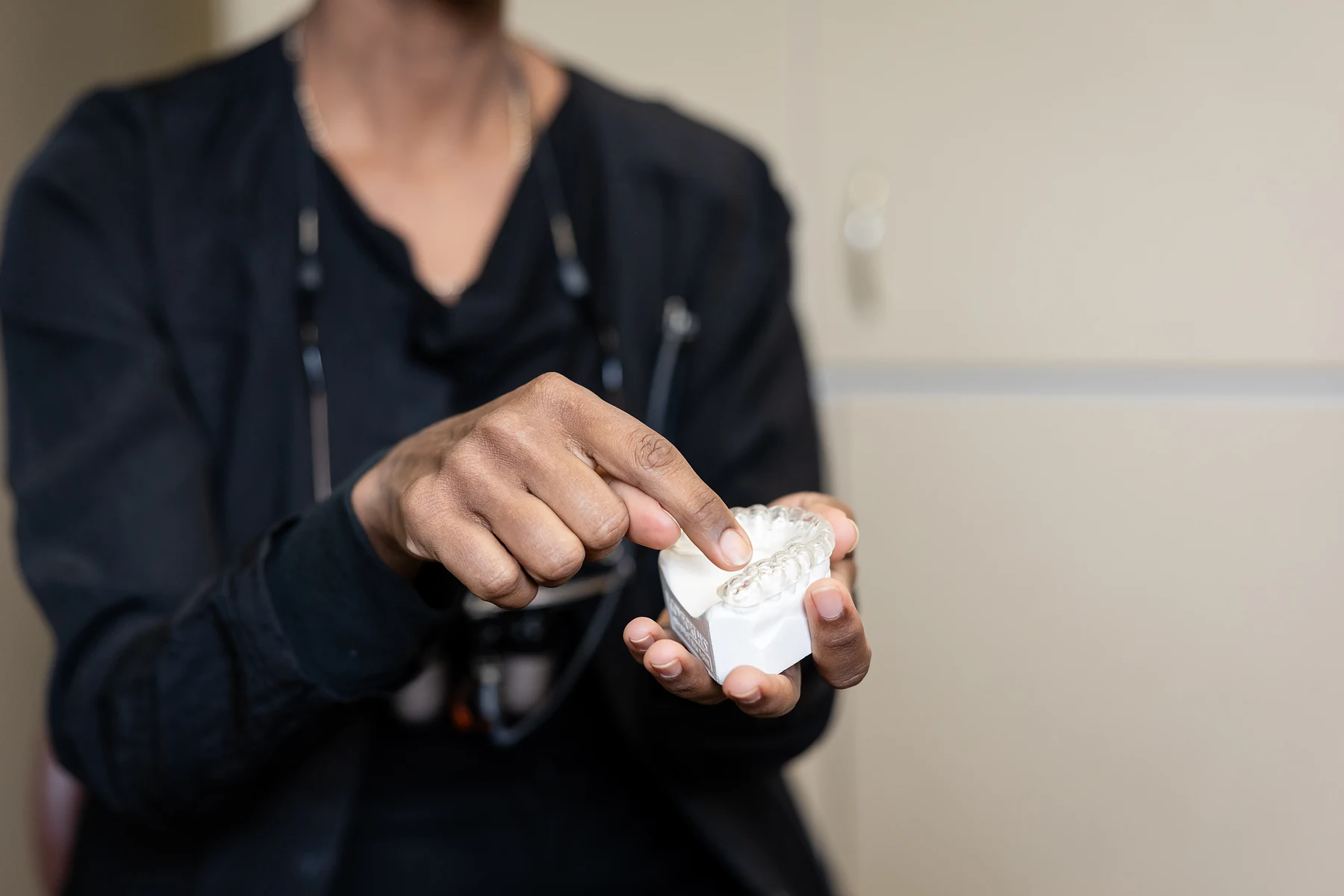
We take a precise record of your teeth and your bite, usually with a digital scan rather than goopy impressions. This is what separates a custom guard from anything you can buy at a pharmacy.
Step 3: Fabrication
Your records go to a dental laboratory, where the guard is made to your specifications — the right thickness and material for how hard you grind or which sport you play.
Step 4: Fitting and adjustment
You come back to try the guard in. We check the fit, adjust it until it seats comfortably and your bite feels even, and show you how to wear and clean it. Most people need one adjustment visit; some need none.
Caring for your guard
- Rinse it every time you take it out, and brush it gently with a soft brush
- Let it dry completely before storing it in its case
- Keep it away from heat — hot water, dishwashers, and car dashboards warp it
- Bring it to your routine cleanings so we can check the fit and the wear
A well-cared-for night guard often lasts five years or more. Heavy grinders go through them faster, which is useful information in itself.
Frequently Asked Questions
How is a custom night guard different from a drugstore one?
A custom guard is made from a scan or impression of your own teeth, so it is thinner, stays in place, and spreads force evenly across your bite. Boil-and-bite guards are bulky, shift during the night, and often leave the jaw working harder than before.
How do I know if I grind my teeth?
Common signs are morning headaches, jaw soreness or clicking, unexplained neck and ear pain, increased sensitivity, and teeth that look flattened or chipped. Often a partner notices first. We can also see the wear pattern during a routine exam, usually before symptoms show up.
How long does a night guard last?
A well-cared-for night guard often lasts five years or more. Heavy grinders go through them considerably faster — which is useful diagnostic information in itself. Bring your guard to your cleanings so we can check the fit and let you know when it is time to replace it.
Will it be uncomfortable to sleep in?
There is an adjustment period of a few nights for most people. Because a custom guard is thin and fitted to your teeth, it feels far less intrusive than an over-the-counter guard. If it is still bothering you after a week, come back in and we will adjust it.
Does insurance cover a mouth guard?
Many PPO dental plans cover a night guard when it is prescribed for bruxism, often at a percentage. Sports guards are less commonly covered. We verify your specific benefits before we make one.
Is a night guard the same as a sleep apnea appliance?
No. A night guard protects your teeth from grinding. A sleep apnea oral appliance repositions your lower jaw to keep your airway open while you sleep. They look somewhat similar but do different jobs — and grinding and sleep apnea often occur together, so it is worth mentioning both to your dentist. Learn more about Sleep Apnea Treatment →
Can my child get a sports guard?
Yes, and we recommend it for any child or teen in a contact sport. Kids’ mouths change as they grow, so guards need to be remade periodically — usually each season or as new teeth come in.
Can I wear a sports guard with braces?
Yes, and it is especially important. We make guards designed to fit over orthodontic appliances and protect both your teeth and the hardware. Tell us you have braces when you come in so we build it accordingly.
How many visits does it take?
Usually two: one to take impressions or a digital scan, and one to fit and adjust the finished guard. Some patients need no adjustment at all.